How a PhD student found enlightenment, one narrowboat at a time, along the ancient waterways of Birmingham, UK
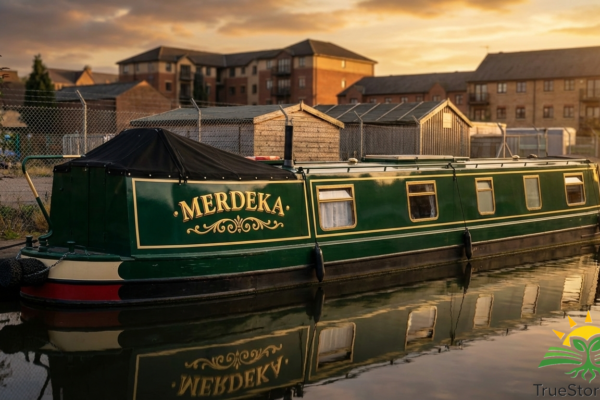
There is a boat called Merdeka moored somewhere along the Birmingham canals. In Bahasa Indonesia and Malay, the word means freedom—a declaration of independence. It was the first narrowboat I ever photographed, number 001 in a collection that would eventually grow to 432 vessels, each bearing a name that whispers its own story across the still waters of England’s industrial heartland.
I did not set out to become a collector of boat names. I set out, quite simply, to run.
For six years, from 2011 to 2017, I was a PhD student at the University of Birmingham. The weight of research, the isolation of academia, the relentless pressure of producing original thought—these burdens accumulated like sediment. I needed motion. I needed to move through space, to feel my lungs burn and my heart pound, to remind myself that I existed beyond the confines of libraries and laboratories.
So, I ran. At least twice a week, sometimes more, I would lace up my New Balance trainers, pull on a T-shirt and jersey trousers, slip my smart phone into my pocket, and disappear into the towpaths.
* * *
Birmingham has more miles of canal than Venice. Let that fact settle for a moment. This city of concrete and industry, of curry houses and corner shops, of Peaky Blinders mythology and Cadbury chocolate, is threaded through with 35 miles of navigable waterway—remnants of the Industrial Revolution when these narrow channels carried coal and cargo across the beating heart of England.
Today, the barges that glide through these waters carry not freight but dreams. They are floating homes, wandering retreats, slow-motion escapes from the velocity of modern life. And each one bears a name, painted in elaborate scrollwork across its bow or stern, declaring to the world something essential about its owner’s spirit.
Hakuna Matata. No Regrets. Second Chance. Serendipity.
I began photographing them almost by accident. A pause to catch my breath became a moment of curiosity. Who names their boat Granny Spice? What story lies behind Stiff Ripples? Is there heartbreak in Remind Me, hope in Phoenix, wisdom in Slow Progress?
The Philosopher’s Towpath
My typical route stretched more than 10 kilometers. On ambitious days, I would push it to a half-marathon—22 kilometers of canal-side meditation. Spring’s blossoms, summer’s heat, autumn’s golden decay, winter’s biting cold—none of it deterred me. Even during Ramadan, when I would fast from dawn to dusk, I ran. On the longest summer days, this meant nearly 19 hours without food or water. I would run in the mornings then, returning home to shower and rest before breaking my fast at the campus prayer room.
People often ask how I managed it. The answer lies in the word within the word: emotion contains motion. When sadness weighs upon you, when stress coils around your chest, the body knows what the mind forgets: movement is medicine. Thirst and hunger visited me during those fasting runs, yes. But when joy propels you forward, discomfort becomes merely scenery.
Along the way, I harvested wild blackberries that grew thick along the canal banks. I exchanged hellos with cyclists and other joggers, smiled at young couples walking hand in hand, waved at children who waved first. The canals became my village, my commons, my open-air cathedral.
* * *
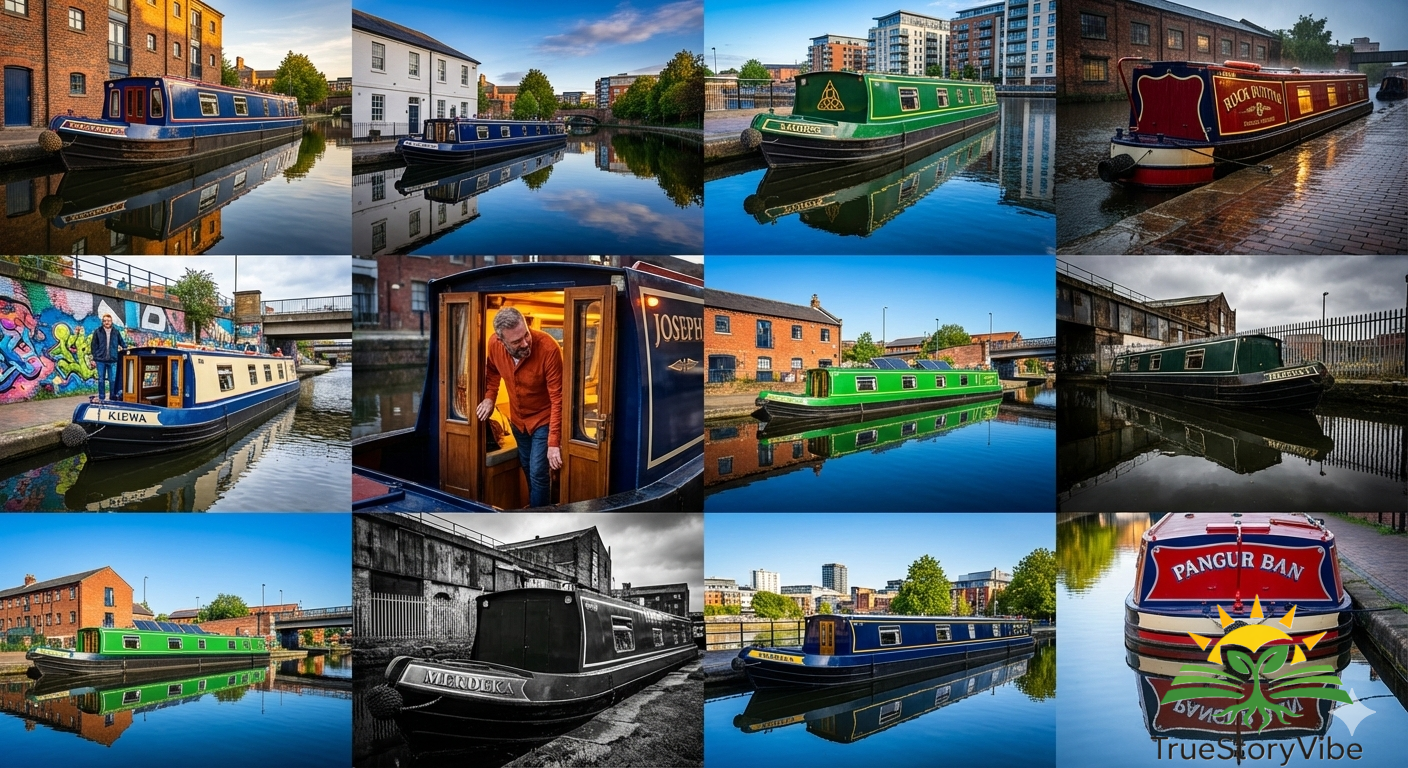
The boats themselves became characters in the story of those years. Some names spoke of far-flung origins and wanderlust: Kinabalu, after the sacred mountain of Borneo in Malaysia. Kiewa, an Australian river. Stornoway, the windswept harbour town of the Scottish Outer Hebrides. Saoirse—freedom, again, this time in Irish—and Ehawee, a Lakota Sioux word meaning “laughing maiden.”
Others whispered of literature and legend. Rivendell and Saruman floated just a towpath apart—Tolkien’s universe made tangible on English water, perhaps a tribute to the author who once walked these very Midlands. Pangur Bán recalled the ninth-century Irish poem about a monk and his cat. Peter Pan promised eternal youth. Ophelia drifted past, forever associated with water and tragedy.
The collection grew to include playful puns (Butty Sark, Fizzical Attraction, Master Peace), cosmic aspirations (Cassiopeia, Centaurus, Jupiter), beloved names (Debbie, Lizzie, Isabella, Megan the Fair), and pure philosophy (Eúnoia—the Greek word for “beautiful thinking,” and Anoesis, meaning thought without rational structure, pure sensation).
What the Water Taught
Looking back now, I understand that the jogging was never merely exercise. It was pilgrimage. The towpath was my labyrinth, each turn bringing me closer to some essential truth about my own existence. The boat names became koans, riddles for the running mind to contemplate.
What does it mean to be Invincible? To seek The Answer? To remain At Ease when the world demands urgency? Perhaps the owners of Small Dreams understood something that those chasing Phenomenal had yet to learn. Perhaps Perseverance and Slow Progress were not opposites of speed but alternatives to it.
Those six years transformed me. My body grew lean and strong, my stomach flat, my muscles defined. But more importantly, my mind cleared. Ideas that would reshape my life emerged from those canal-side meditations. Running became contemplation became revelation.
I came to Birmingham a PhD student, seeking knowledge. I left something more: a person who had run thousands of kilometers alongside 432 floating testimonies to human hope, human humor, and human longing for freedom on the open water.
* * *
The collection is complete now—or as complete as any collection can be. Somewhere in Birmingham, the boats still drift: Freedom No. 1 and Liberty, Dream Maker and Indigo Dream, Imagine and Magic. New joggers pass them by, perhaps pausing as I once did to wonder at a curious name. Doctor Dolittle still suggests conversation with the wild things. A Different Drummer still beats its own rhythm.
And somewhere, always, Merdeka reminds us that freedom is a journey, not a destination—as endless and winding as the Birmingham canals themselves.
* * *
This essay is the first in a series exploring the stories behind the 432 boats.